

Table of Contents
ToggleYou’re in the middle of an ordinary moment.
Nothing unusual. Nothing “wrong.”
Your child was calm just seconds ago, and then suddenly, there are tears, shouting, a body collapsing to the floor, or an emotional explosion that seems to make no sense at all.
And you’re left frozen with the same question so many adults ask:
“Where did that come from?”
Whether you are a parent, educator, caregiver, or coach, chances are you have been here. You may be looking for real explanations, not blame, not quick fixes, not behavior charts, but a way to truly understand what is happening inside a child when these moments arise.
Because tantrums don’t come out of nowhere. They come from somewhere very specific, from the nervous system, the developing brain, and the invisible accumulation of stress that children carry long before they show it.
Let’s slow this down and look at what’s really going on.
First, Let’s Name This Clearly: Tantrums Are Not Misbehavior
One of the most damaging myths around tantrums is that they are a sign of a “difficult child” or ineffective parenting.
They are not.
A tantrum is not a choice.
It is not manipulation.
It is not a lack of discipline.
A tantrum is a neurobiological stress response.
When a child is tantruming, their nervous system has shifted out of regulation and into survival mode. At that moment, the brain is not concerned with manners, logic, or consequences. It is concerned with one thing only: safety.
This distinction matters because once we mislabel survival as misbehavior, we respond in ways that escalate rather than soothe.
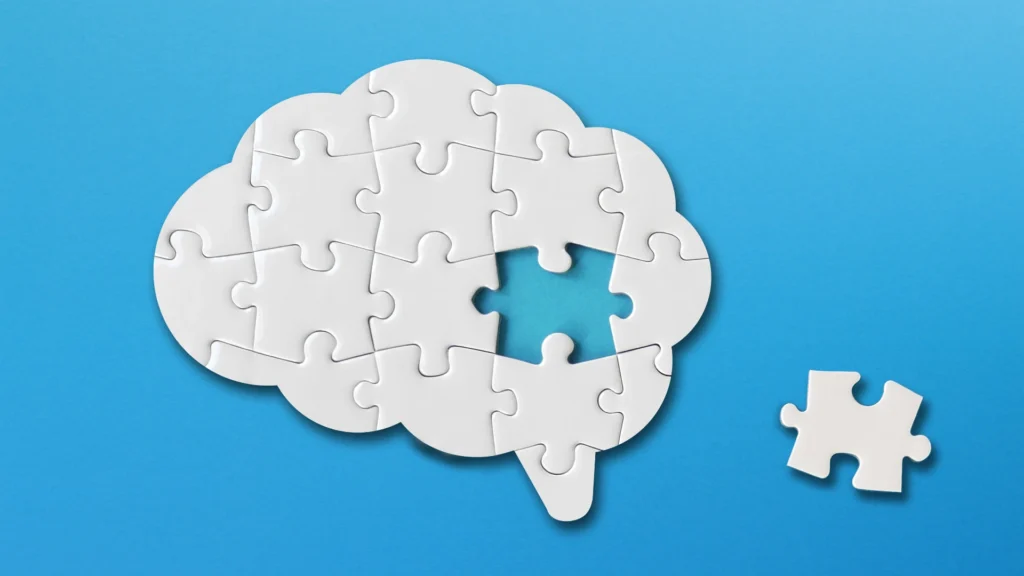
What’s Actually Happening in the Brain (In Real Time)
When a child is regulated, three core systems of the brain work together:
- The brainstem, which manages basic survival functions and stress responses
- The limbic system, which processes emotions and threat
- The prefrontal cortex, which supports reasoning, impulse control, and communication
In a tantrum, this integration breaks down in a very predictable sequence.
1. Stress Builds Quietly
Children experience stress differently from adults. What seems small to us can be enormous to a developing nervous system.
Stress can accumulate through:
- Sensory overload (noise, lights, crowds, clothing)
- Social effort and expectations
- Hunger, thirst, or fatigue
- Emotional restraint (“holding it together” all day)
- Transitions and uncertainty
Importantly, children can look fine while their system is already overloaded. Regulation on the outside does not always reflect regulation on the inside.
2. The Limbic System Sounds the Alarm
Once the stress threshold is crossed, the limbic system, especially the amygdala, detects danger. This happens faster than conscious thought.
The body moves into fight, flight, or freeze.
At this point, the reaction is no longer voluntary. The nervous system has taken over.
3. The Thinking Brain Goes Offline
As survival responses activate, the prefrontal cortex temporarily shuts down.
This is why, in the middle of a tantrum:
- Reasoning doesn’t land
- Language feels inaccessible
- Instructions are ignored
- Consequences escalate distress
The child is not refusing to cooperate. They are unable to.
Why It Feels Like It Came “Out of Nowhere”
Here’s the key insight that changes how tantrums are understood:
The visible trigger is rarely the real cause.
The meltdown over the wrong cup, the broken cracker, or putting on shoes is rarely about that moment.
Those are last-straw triggers.
The real causes are often invisible:
- A long day of self-control
- Emotional suppression
- Overstimulation
- Nervous system fatigue
- Unmet physical or emotional needs
Think of it like a glass slowly filling with water. You don’t see the overflow until it spills, but the filling happened long before.
Tantrums Across Ages: Different Expressions, Same Biology
Tantrums evolve with development, but the nervous system mechanism remains the same.
Toddlers
- Immature self-regulation systems
- Limited language for emotional expression
- High reliance on adult co-regulation
Preschool and early school age
- Increased social and cognitive demands
- Pressure to “behave” and comply
- Emotional exhaustion after structured environments
School-age children
- Masking stress throughout the day
- Meltdowns often occur at home, where safety is felt
Adolescents
- Tantrums may look like shutdown, rage, withdrawal, sarcasm, or defiance
- Still driven by nervous system overload, not attitude
Different behaviors. Same underlying system.
The Role of Co-Regulation: The Missing Piece
Children are not born knowing how to regulate their emotions.
They learn regulation through relationships.
This process is called co-regulation, where a calm, attuned adult nervous system helps a child’s nervous system return to balance.
This means:
- Your calm presence helps their body settle
- Your tone organizes their internal chaos
- Your regulation becomes the blueprint for theirs
This is not indulgence. It is how the brain develops regulation capacity.
Over time, repeated co-regulation builds self-regulation.
What Helps in the Moment, and What Quietly Makes It Worse
When a child is dysregulated, the goal is not to correct behavior. The goal is to restore nervous system safety.
What escalates tantrums:
- Lecturing or explaining
- Threats or punishments
- Asking questions
- Demanding eye contact or apologies
- Telling a child to “calm down.”
These approaches require a thinking brain that is currently offline.
What supports regulation:
- A grounded, calm adult
- Fewer words, slower speech
- Predictable presence
- Physical closeness (if welcomed)
- Time and emotional safety
Once regulation returns, learning becomes possible again.
The long-term focus isn’t stopping tantrums
It’s reducing chronic overload.
This includes:
- Predictable routines
- Adequate sleep and nutrition
- Opportunities for emotional expression
- Sensory regulation
- Secure, attuned relationships
- Adults tending to their own nervous systems
When the nervous system feels safer overall, tantrums naturally decrease, not because they are suppressed, but because they are no longer needed.

A Powerful Reframe for Adults
Instead of asking:
“Why is my child behaving like this?”
Try asking:
“What might their nervous system be communicating right now?”
This shift changes everything:
- Your response becomes calmer
- The child feels safer
- Regulation returns faster
- Trust deepens over time
Closing Reflection
Tantrums are not a parenting failure. They are not a child problem.
They are signs of developing nervous systems navigating a world that often overwhelms them.
When adults understand the science, we stop reacting to behavior and start responding to needs.
And that is where real developmental support begins.
Thank you for reading and for your heartfelt support and interest. As always, your thoughts, insights, and stories are warmly welcome.
With grace and gratitude,
Lux Hettiyadura
Directress, Child/Adolescent Development & Parenting Coach Education – Ignite Global
If This Resonated With You…
🌱 Attachment Healing Circle – A free monthly space to gently heal your attachment system through safe, nurturing connection. Join here.
🎥 Keep Learning on YouTube – Attachment science explained in everyday language, with practical tools you can use right away. Watch here.
📚 Read More – The Neuroscience of Learning: How Early Relationships Shape Brain Architecture and Academic Outcomes. Read here.
🤝 Share the Love – If this article touched you, share it with someone who may need these words today. Sometimes, the smallest act of passing on knowledge creates the biggest ripple in someone’s healing journey.
References
Siegel, D.J. (2012) The Whole-Brain Child: 12 Revolutionary Strategies to Nurture Your Child’s Developing Mind. New York: Bantam Books.
Foundational for explaining integration of brainstem, limbic system, and prefrontal cortex; co-regulation and emotional development.
Siegel, D.J. (2020) The Developing Mind: How Relationships and the Brain Interact to Shape Who We Are. 3rd edn. New York: Guilford Press.
Core reference for interpersonal neurobiology, nervous system regulation, and relational safety.
Porges, S.W. (2011) The Polyvagal Theory: Neurophysiological Foundations of Emotions, Attachment, Communication, and Self-Regulation. New York: W.W. Norton & Company.
Scientific foundation for understanding stress responses, fight/flight/freeze, and safety cues in children.
Perry, B.D. and Szalavitz, M. (2017) The Boy Who Was Raised as a Dog. New York: Basic Books.
Explains developmental stress, state-dependent functioning, and why reasoning fails during dysregulation.
Schore, A.N. (2019) Right Brain Psychotherapy. New York: W.W. Norton & Company.
Evidence for right-brain emotional processing, affect regulation, and the role of attuned caregiving.
Gunnar, M.R. and Quevedo, K. (2007) ‘The neurobiology of stress and development’, Annual Review of Psychology, 58, pp. 145–173.
Empirical research on stress accumulation, cortisol, and developmental vulnerability.
Thompson, R.A. (2014) ‘Stress and child development’, The Future of Children, 24(1), pp. 41–59.
Explains how chronic stress affects emotional regulation and behavior in children.
Coan, J.A. and Maresh, E.L. (2014) ‘Social baseline theory and the social regulation of emotion’, Social and Personality Psychology Compass, 8(9), pp. 504–515.
Supports the science of co-regulation and why humans—especially children—regulate through connection.
Kopp, C.B. (1982) ‘Antecedents of self-regulation: A developmental perspective’, Developmental Psychology, 18(2), pp. 199–214.
Classic developmental research on how self-regulation emerges through caregiver support.
Shonkoff, J.P. et al. (2012) ‘The lifelong effects of early childhood adversity and toxic stress’, Pediatrics, 129(1), pp. e232–e246.
Authoritative source on stress physiology, overload, and long-term impact on development.