Table of Contents
ToggleA Familiar Experience, One We Rarely Pause to Understand
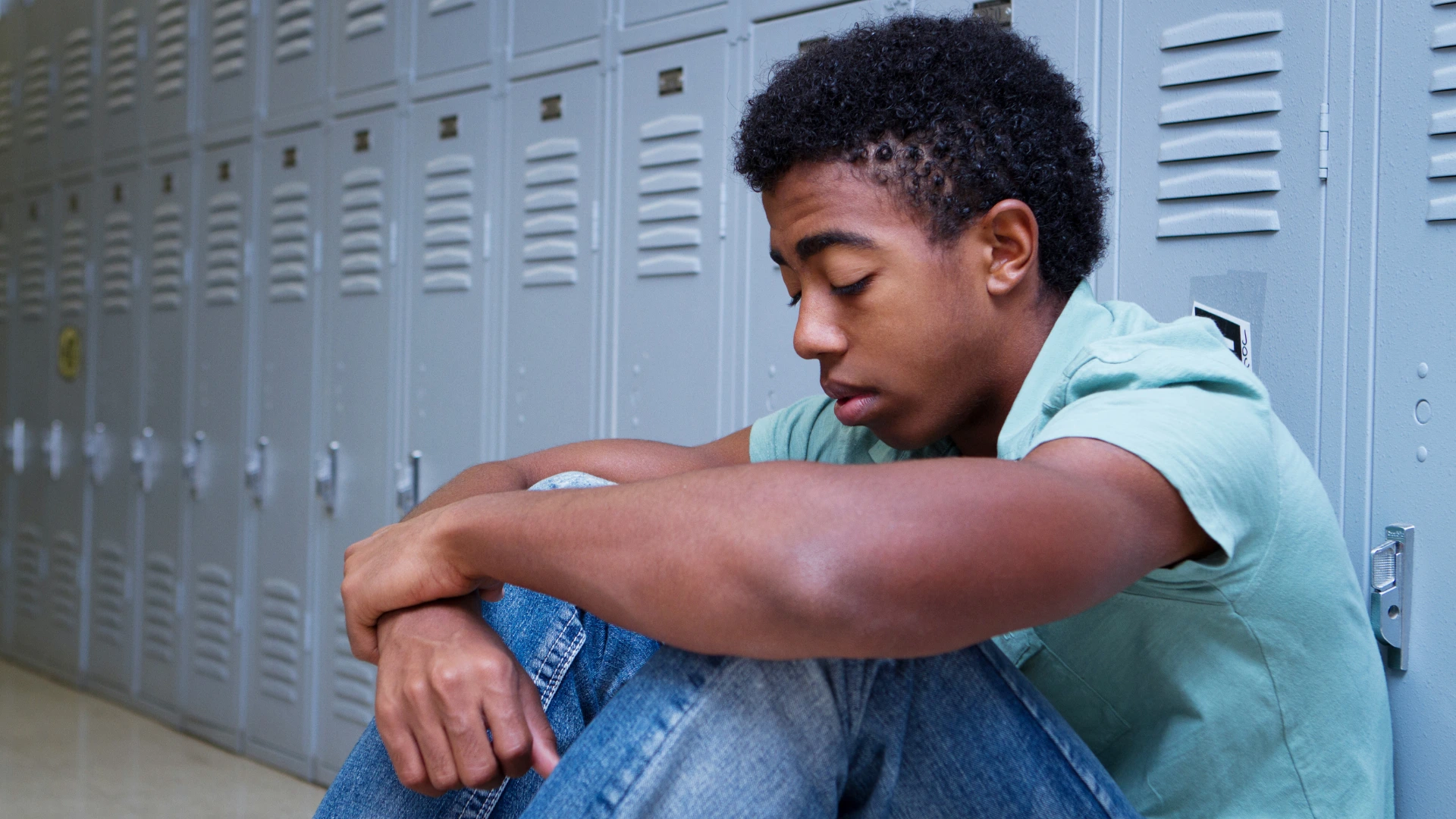
Have you ever noticed a child who simply couldn’t sit still, no matter how often they were ‘told to’?
Have you supported a student who struggles to engage, withdraws, or goes invisible in the classroom?
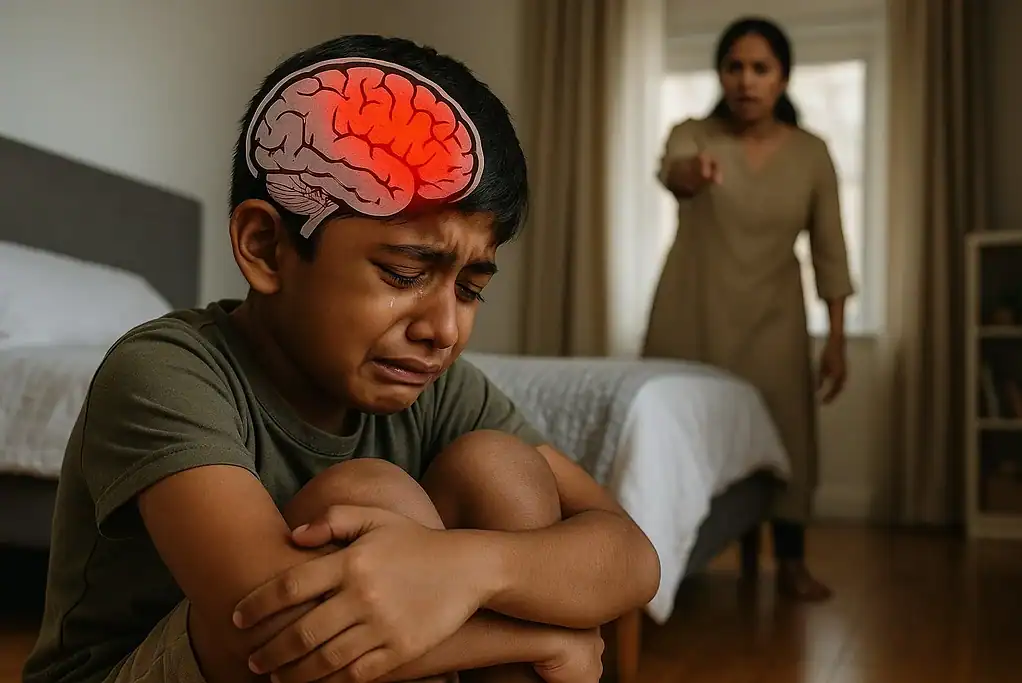
Or perhaps one who lashed out, interrupted, disrupted, or exploded, leaving everyone feeling overwhelmed?
And maybe, as you read this, something more personal arises.
Perhaps you were once that child;
Silently battling big emotions.
Trying to cope.
Misunderstood.
Punished rather than supported.
Across homes, classrooms, therapy rooms, and coaching spaces, these children are often labelled:
- Difficult
- Disruptive
- Unmotivated
- Attention-seeking
- Non-compliant
- Bully
And the response is often immediate:
- Discipline
- Punishment
- Removal
- Correction
But what if the behaviour we are reacting to is not the problem, but the signal?
Attachment Experiences at Home Don’t Stay at Home
Attachment science shows us that children form models based on their earliest relational experiences.
These unconscious templates quietly answer questions such as:
- Am I safe with adults?
- Are my needs welcome or burdensome?
- What happens when I struggle or make mistakes?
- Is the connection reliable?
A child who experiences emotional inconsistency, fear, neglect, or chronic stress at home does not leave those experiences behind when they walk into a classroom, coaching session, or learning environment.
They carry them in their nervous system, shaping how they relate, learn, respond, and protect themselves.
A Global Knowledge Gap We Can No Longer Ignore
Despite decades of research in neuroscience, attachment, and trauma studies, most adults responsible for children receive little to no formal education in child development.
The Shaping Us Campaign, led by the Royal Foundation and championed by the Princess of Wales, was launched to address this exact gap.
The campaign highlights that:
- A significant majority of adults report never having been taught how children’s brains, emotions, and nervous systems develop.
- Parents consistently express a strong desire for more education around emotional development, relationships, and mental health.
- Many professionals working with children receive training focused on performance and behaviour, rather than development, regulation, and emotional safety.
In other words:
We are raising, teaching, and supporting children with outdated maps.
This gap leaves parents, educators, and professionals doing their best with the information they were never given, and children pay the price.
Trauma Is Not Always Big Events, Often It’s Chronic Misattunement
Trauma, particularly developmental trauma, is widely misunderstood.
It is not only abuse, accidents, or major life events.
It is also:
- Repeated emotional dismissal
- Chronic stress without support
- Inconsistent caregiving
- Lack of repair after rupture
- Being expected to cope alone
Children adapt to these conditions through survival responses:
- Fight → aggression, defiance
- Flight → avoidance, hyperactivity
- Freeze → shutdown, dissociation
- Fawn → people-pleasing, over-compliance
These are adaptive strategies, not personality traits.

The Body Remembers What the Mind Cannot Process
One of the most influential contributions to trauma science comes from Dr. Bessel van der Kolk, author of The Body Keeps the Score.
His work shows that:
- Trauma is not only remembered cognitively
- It is stored in the body and nervous system
- Children may not consciously recall events, but their bodies respond as if danger is still present
This means a child may:
- Overreact to seemingly small stressors
- Shut down without an obvious reason
- Feel chronically anxious or emotionally numb
- Struggle to focus, stay present, or feel safe
Punishing these responses does not resolve them. It reinforces the sense of danger.
How Systems Unintentionally Re-Traumatize Children
When trauma-based behaviour is met with:
- Shame
- Harsh discipline
- Public correction
- Exclusion or isolation
The child’s nervous system receives a devastating message:
“I am unsafe when I struggle.”
This does not teach self-control. It teaches self-abandonment.
A quiet, compliant child is not always a regulated one. Often, they are simply shut down enough to survive.
Trauma- & Attachment-Informed Care Is Mental-Health Crisis Prevention
When children are repeatedly misunderstood and punished for survival responses, long-term risks increase:
- Anxiety and depression
- Learning difficulties
- Burnout and disengagement
- Risk-taking behaviours in adolescence
- Adult mental-health struggles rooted in childhood
Trauma- and attachment-informed approaches intervene before crisis develops.
They ask:
- What is this child’s nervous system responding to?
- What support is missing?
- How can we co-regulate before we correct?

Regulation Always Comes Before Learning and Behaviour Change
Neuroscience is clear:
- Safety precedes learning
- Connection precedes cooperation
- Regulation precedes reasoning
A regulated child can access:
- Focus
- Memory
- Curiosity
- Emotional regulation
This applies not only at home, but in schools, coaching spaces, therapy rooms, and all child-facing systems.
This Is Not About Lowering Standards, It’s About Raising Awareness
Trauma- and attachment-informed approaches do not mean:
- No boundaries
- No accountability
- No expectations
They mean:
- Boundaries held with connection
- Accountability without shame
- Expectations matched to developmental capacity
This is how resilience is built from the inside out.
The Adult Nervous System Is the Intervention
One of the most powerful truths in child development is that children regulate through us before they regulate by themselves.
Parents, educators, and professionals do not need to fix children. They need to understand what children are responding to.
This is why trauma-informed work always includes:
- Adult self-reflection
- Nervous-system awareness
- Capacity for repair
Repair Is Where Healing Happens
Secure attachment is not built through perfection.
It is built when adults:
- Notice rupture
- Take responsibility
- Repair with sincerity
Repair teaches children:
- Relationships can survive conflict
- Mistakes do not equal abandonment
- Emotional honesty is safe
This is how intergenerational trauma is interrupted.
A Collective Responsibility
Trauma- and attachment-informed approaches are not a trend. They are a developmental, ethical, and social responsibility.
If we care about:
- Children’s mental health
- Learning outcomes
- Emotional resilience
- Future relationships
Then understanding what lives beneath behaviour is no longer optional.
Closing Reflection
Every “difficult” child is a child having a difficult experience.
Every behaviour is communication.
Every moment of understanding is prevention.
When we stop asking “What’s wrong with this child?” and start asking “What happened, and what support is missing?”
We don’t just change outcomes. We change generations yet to come.
Thank you for reading and for your heartfelt support and interest. As always, your thoughts, insights, and stories are warmly welcome.
With grace and gratitude,
Lux Hettiyadura
Directress, Child/Adolescent Development & Parenting Coach Education – Ignite Global
If This Resonated With You…
🌱Attachment Healing Circle – A free monthly space to gently heal your attachment system through safe, nurturing connection. Join here.
🌱 Global Parenting & Child Development Support Network – A free monthly learning and reflection space for conscious parenting and whole-child development. Join here.
🎥 Keep Learning on YouTube – Attachment science explained in everyday language, with practical tools you can use right away. Watch here.
📚Read More- The Neuroscience of Learning: How Early Relationships Shape Brain Architecture and Academic Outcomes. Read here.
🤝 Share the Love – If this article touched you, share it with someone who may need these words today. Sometimes, the smallest act of passing on knowledge creates the biggest ripple in someone’s healing journey.
References
Bowlby, J. (1969) Attachment and Loss: Volume I – Attachment. London: Hogarth Press.
Bowlby, J. (1988) A Secure Base: Parent-Child Attachment and Healthy Human Development. London: Routledge.
van der Kolk, B. (2014) The Body Keeps the Score: Brain, Mind, and Body in the Healing of Trauma. New York: Viking.
Porges, S.W. (2011) The Polyvagal Theory: Neurophysiological Foundations of Emotions, Attachment, Communication, and Self-Regulation. New York: W.W. Norton & Company.
Porges, S.W. (2022) Polyvagal Safety: Attachment, Communication, Self-Regulation. New York: W.W. Norton & Company.
Ainsworth, M.D.S., Blehar, M.C., Waters, E. and Wall, S. (1978) Patterns of Attachment: A Psychological Study of the Strange Situation. Hillsdale, NJ: Lawrence Erlbaum Associates.
Siegel, D.J. (2012) The Developing Mind: How Relationships and the Brain Interact to Shape Who We Are. 2nd edn. New York: Guilford Press.
Siegel, D.J. and Bryson, T.P. (2012) The Whole-Brain Child: 12 Revolutionary Strategies to Nurture Your Child’s Developing Mind. New York: Delacorte Press.
Shonkoff, J.P. et al. (2012) ‘The lifelong effects of early childhood adversity and toxic stress’, Pediatrics, 129(1), pp. e232–e246. https://doi.org/10.1542/peds.2011-2663
Felitti, V.J. et al. (1998) ‘Relationship of childhood abuse and household dysfunction to many of the leading causes of death in adults’, American Journal of Preventive Medicine, 14(4), pp. 245–258.
The Royal Foundation of The Prince and Princess of Wales (2023) Shaping Us: Early Childhood Campaign. Available at: https://www.royalfoundation.com/shaping-us/
(Accessed: [insert date]).
Shaping Us (2023) Public attitudes to early childhood development and mental health. London: The Royal Foundation.