Table of Contents
ToggleDuring one of the group facilitation sessions, the room was quiet.
Then Thamara spoke.
“The breakup was five years ago… but I still feel it in my body.
I can still taste it in my mouth.
I still get that knot in my stomach.
My knees feel weak just thinking about it.
My palms tingle.
It’s like the event is over… but the ghost never left.”
No one in the room looked surprised.
Because they understood.
After a pause, others began to speak.
One participant described how she keeps trying to prove herself to someone emotionally unavailable, waiting to be chosen, even though she feels exhausted and unseen.
Another shared that the moment someone shows up consistently and offers steady care, he slowly loses interest and begins to create distance.
Someone admitted that whenever there is even a small shift in tone or response time, panic rises instantly in the chest, as if the relationship is about to end.
And one person said that whenever someone is upset with her, she apologizes automatically, even when she has done nothing wrong, because conflict feels unbearable, as though some invisible punishment might follow.
No one used clinical language. They spoke about sensations.
Tightness.
Urgency.
Numbness.
Restlessness.
Collapse.
And beneath it all, there was shame, not from a lack of awareness, but from feeling unable to regulate their reactions.
The Body Remembers What the Mind Has Moved On From
Most people assume these reactions are personality traits.
“I’m just anxious.”
“I’m avoidant.”
“I’m too sensitive.”
“I’m emotionally unavailable.”
But what if these are not personality flaws?
What if they are nervous system patterns?
From the moment we are born, connection is not just emotional.
Connection equals survival.
A newborn cannot regulate hunger, fear, temperature, or distress alone. The infant brain develops in constant interaction with a caregiver’s nervous system. Through thousands of repeated interactions, being soothed, ignored, comforted, startled, held, or left alone, the child’s nervous system organizes itself around one central question:
Is connection safe?
Over time, these repeated relational experiences form what attachment theory calls Internal Working Models, unconscious templates about:
- Who I am in relationships
- What others are like
- Whether love is reliable or unpredictable
- Whether closeness is safe or costly
We may not consciously remember most of our early childhood experiences.
But the body does.
Through implicit memory, the nervous system encodes patterns not as stories, but as sensations, muscle tension, emotional reflexes, and automatic responses.
This is why, five years after a breakup, the body can still react as if it is happening now.
Because the nervous system does not track time.
It tracks safety.
Attachment as an Internal Alarm System
Attachment is not simply a psychological “style.”
It is a biological alarm system.
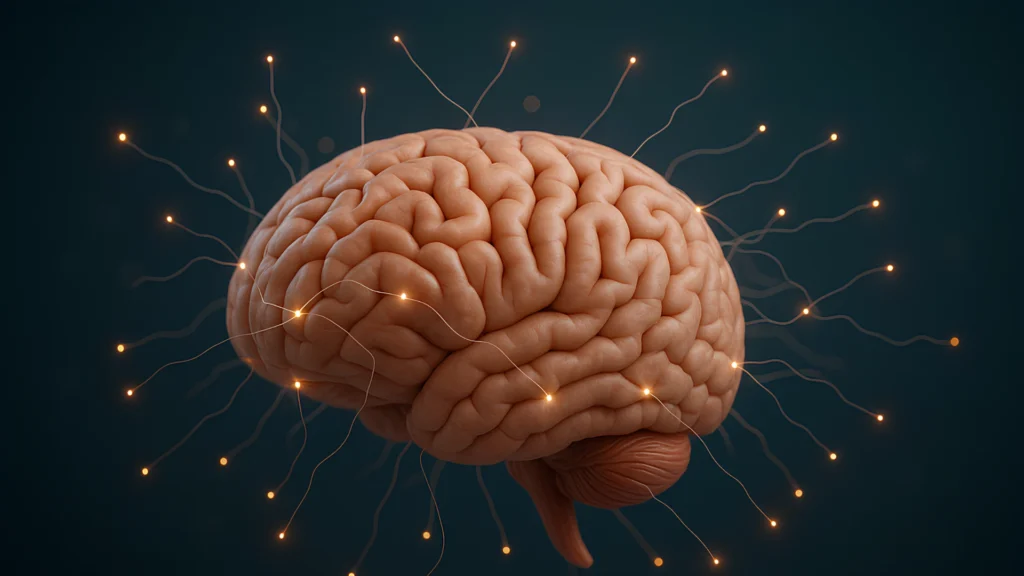
Your autonomic nervous system constantly scans for cues of safety or threat in connection. This happens automatically, outside conscious awareness.
When the system detects distance, unpredictability, rejection, or emotional intensity, it activates.
Not because you are overreacting, but because your nervous system once encoded connection as essential for survival.
There are two primary survival responses in adult relationships:
Sympathetic Activation (Fight-or-Flight)
This is hyper-arousal.
It may appear as:
- Checking your phone repeatedly
- Overanalyzing tone or response time
- Feeling urgency to repair
- Fear of being replaced
- Anxiety rising in the chest or throat
The nervous system interprets distance as danger.
Parasympathetic Deactivation (Shutdown)
This is hypo-arousal.
It may appear as:
- Losing interest suddenly
- Feeling numb during conflict
- Pulling away emotionally
- Feeling suffocated by closeness
- Going blank
The nervous system interprets closeness as overwhelming.
There is also a third state, the ventral vagal state, associated with safety, calm, and genuine connection. This state supports emotional regulation, empathy, and relational stability. It is the physiological foundation of secure attachment.
But when attachment is triggered, survival responses override reasoning.
The amygdala activates before the prefrontal cortex can evaluate context.
Which is why you can promise yourself not to over-text, over-apologize, or withdraw…
And still find yourself doing it.
Why We Reuse Old Wiring
Under stress, the nervous system does not create new strategies. It defaults to familiar ones, even when they are painful, because familiarity feels predictable, and predictability feels safer than the unknown.
So someone may leave a relationship determined to choose differently, and still feel drawn to similar dynamics.
This is not a lack of intelligence.
It is the nervous system repeating what it learned early on.
Old wiring gets repurposed in adulthood, not by choice, but because it once ensured survival.
The Hidden Weight of Shame
Perhaps the most painful part is not the behavior itself, but the self-criticism that follows.
We judge ourselves for reacting. We feel embarrassed for caring too much, or ashamed for caring too little.
Over time, the pattern hardens into identity:
“This is just who I am.”
But identity is not the same as adaptation.
You are not your survival strategy. Your nervous system adapted to relational environments that required vigilance, self-protection, or appeasement. Adaptation is not a weakness. It is intelligence under pressure.
Why Insight Alone Does Not Change Attachment Patterns
You may intellectually understand your attachment pattern.
You may recognize your triggers.
Yet in moments of activation, insight often disappears.
Attachment responses are physiological before they are cognitive. The body reacts before the mind can interpret.
For this reason, healing attachment requires more than awareness.
It requires nervous system literacy, the ability to recognize early signs of activation in the body before they turn into automatic behavior.
Rewiring the Attachment System
The hopeful truth is this:
The nervous system is plastic.
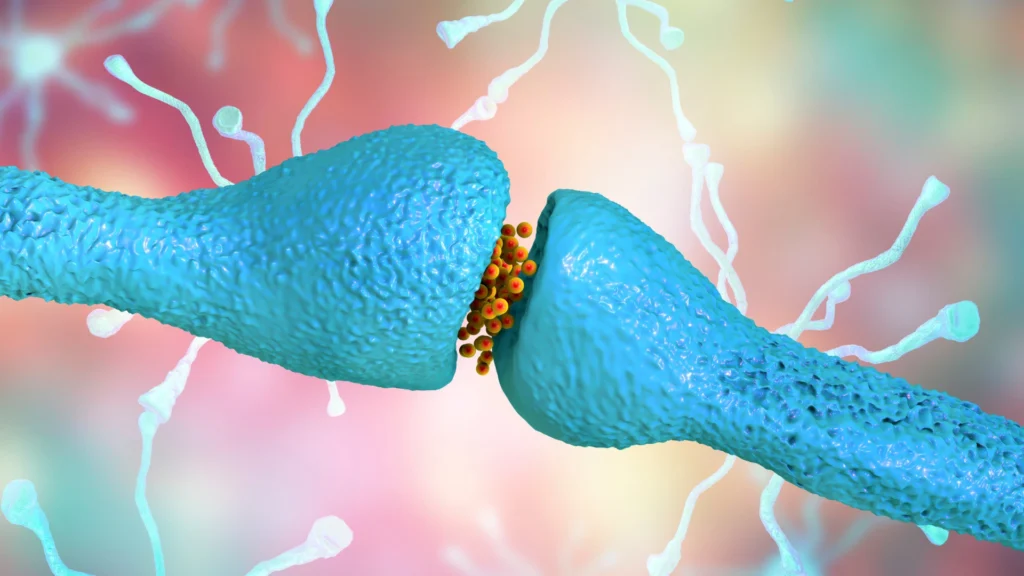
Through neuroplasticity, repeated experiences of safety, especially relational safety, can reorganize old attachment wiring.
Healing begins when we:
- Notice early body signals of activation
- Pause before reacting
- Stay present with mild relational discomfort
- Experience co-regulation with safe others
- Build tolerance for emotional closeness
Secure attachment is not perfection. It is flexibility.
It is the capacity to move into activation and return to regulation, without abandoning yourself or disconnecting from others.
Closing Reflection
If something still lives in your body long after an event has passed, it does not mean you are broken.
It means your nervous system has not yet updated its map of safety.
The question shifts from:
“What is wrong with me?”
To:
“What did my nervous system learn about love?”
And more importantly:
“What new experiences of safety can help it learn something different?”
Attachment healing is not about becoming someone else.
It is about helping your body experience safety in connection, consistently enough that it no longer needs to protect you in the same way.
And that work is possible.
Thank you for reading and for your heartfelt support and interest. As always, your thoughts, insights, and stories are warmly welcome.
With grace and gratitude,
Lux Hettiyadura
Directress, Child/Adolescent Development & Parenting Coach Education – Ignite Global
If This Resonated With You…
🌱 Attachment Healing Circle – A free monthly space to gently heal your attachment system through safe, nurturing connection: Join now.
🌱 How Trauma & Attachment inform Parenting, and Child Development – A free monthly space to explore how trauma and early attachment experiences shape parenting, behavior, and the developing child: Join now.
🎥 Keep Learning on YouTube – Attachment science explained in everyday language, with practical tools you can use right away: Watch here.
📚 Read More – Why You Keep Choosing Unavailable Partners: The Truth About Anxious Attachment: Read here.
🤝 Share the Love – If this article touched you, share it with someone who may need these words today. Sometimes, the smallest act of passing on knowledge creates the biggest ripple in someone’s healing journey
References
Ainsworth, M.D.S., Blehar, M.C., Waters, E. and Wall, S., 1978. Patterns of attachment: A psychological study of the strange situation. Hillsdale, NJ: Lawrence Erlbaum Associates.
Bowlby, J., 1969. Attachment and loss: Vol. 1. Attachment. New York: Basic Books.
Bowlby, J., 1973. Attachment and loss: Vol. 2. Separation: Anxiety and anger. New York: Basic Books.
Bowlby, J., 1980. Attachment and loss: Vol. 3. Loss: Sadness and depression. New York: Basic Books.
Damasio, A.R., 1994. Descartes’ error: Emotion, reason, and the human brain. New York: Putnam.
LeDoux, J., 1996. The emotional brain: The mysterious underpinnings of emotional life. New York: Simon & Schuster.
Porges, S.W., 2011. The polyvagal theory: Neurophysiological foundations of emotions, attachment, communication, and self-regulation. New York: W.W. Norton.
Schore, A.N., 2001. Effects of a secure attachment relationship on right brain development, affect regulation, and infant mental health. Infant Mental Health Journal, 22(1–2), pp.7–66.
Schore, A.N., 2003. Affect regulation and the repair of the self. New York: W.W. Norton.
Siegel, D.J., 2012. The developing mind: How relationships and the brain interact to shape who we are. 2nd ed. New York: Guilford Press.
Siegel, D.J., 2020. The developing mind. 3rd ed. New York: Guilford Press.
Van der Kolk, B., 2014. The body keeps the score: Brain, mind, and body in the healing of trauma. New York: Viking.