
Table of Contents
Toggle“Why are you so picky?”
It is a question many people hear when they are careful about choosing a partner.
Sometimes it is said jokingly.
Sometimes it carries judgment.
And sometimes it comes with a quiet warning.
“If you are too selective, you might end up alone.”
For many people, this question lingers in the background of conversations about relationships. It can make someone wonder whether they are expecting too much, whether they should lower their standards, or whether being thoughtful about who they allow into their life somehow makes them difficult.
But what if the opposite is true?
What if choosing a partner carefully is not about being picky at all?
What if it is about being conscious of the life you are building?
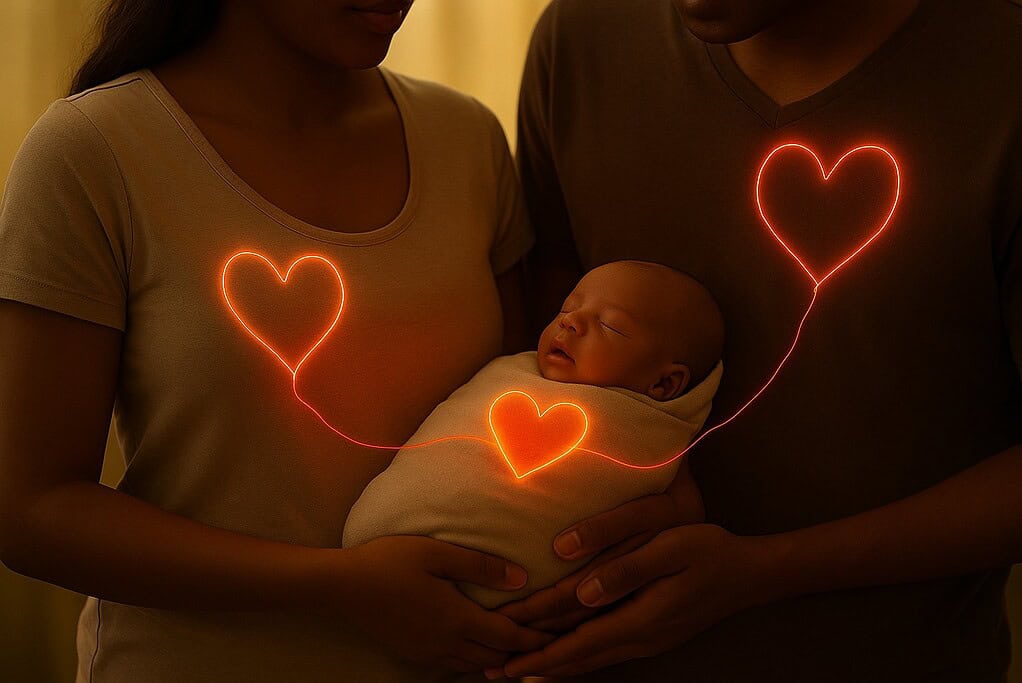
Because when two people enter a relationship, they are not only choosing companionship. They are choosing the emotional environment they will live in together. And sometimes, whether intentionally or unexpectedly, that environment becomes the place where a child enters the world.
In that moment, the relationship between two adults becomes something much bigger than romance.
It becomes the beginning of a family system.
Relationships Often Become Developmental Environments
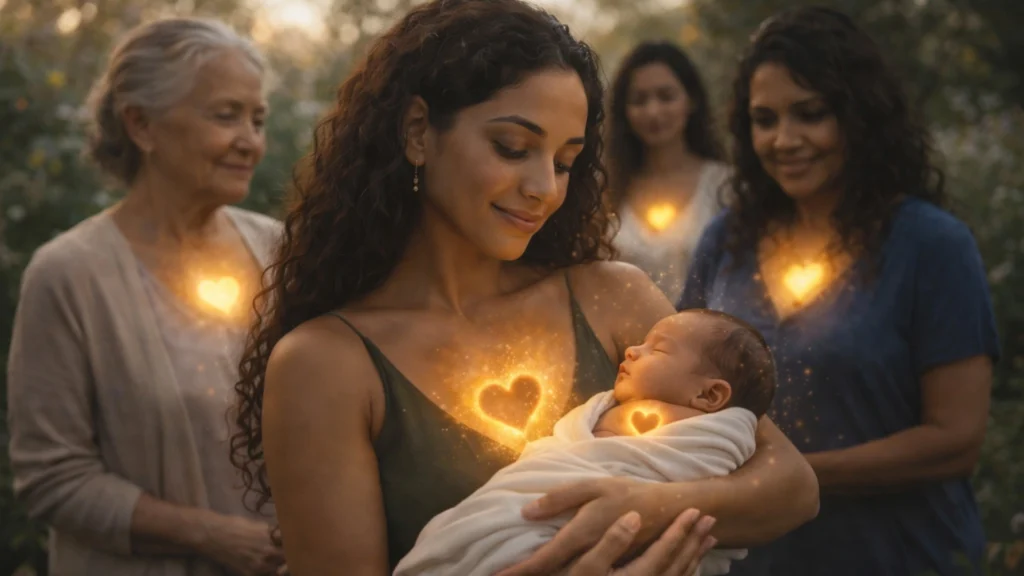
When we think about relationships, we usually think about attraction, compatibility, or shared interests. We ask questions like:
Do we enjoy each other’s company?
Do we have similar goals?
Do we feel chemistry?
These are important questions.
But developmental science invites us to consider another dimension.
Because romantic relationships often evolve into families, and families are the primary environments in which children grow and develop.
Before a child goes to school.
Before they form friendships.
Before they encounter the wider world.
Their understanding of life, safety, and relationships is shaped within the home.
Long before a child understands language, their nervous system is already learning from the emotional climate around them.
From the tone of voices.
From the way conflict is handled.
From the presence or absence of emotional safety.
And the most influential part of that environment is the relationship between the caregivers raising them.
A Child Does Not Only Inherit DNA

A child inherits genes from their parents.
But they also inherit something less visible.
They inherit an emotional environment.
Developmental psychology and attachment research have shown that children build internal maps of relationships through their early experiences with caregivers. These maps are often referred to as internal working models.
Through everyday interactions, children begin to learn answers to fundamental questions about life:
Is the world safe?
Are people reliable?
Am I worthy of love and care?
These beliefs are not taught through lectures or instructions.
They are learned through experience.
And children do not only learn from how their parents treat them.
They also learn from how their parents treat each other.
They observe how adults communicate.
How they manage conflict.
How they repair misunderstandings.
How they express care, frustration, patience, or respect.
The relationship between parents becomes the emotional architecture of the home.
It is the atmosphere in which a child’s nervous system develops.
The Nervous System Learns Through Relationships

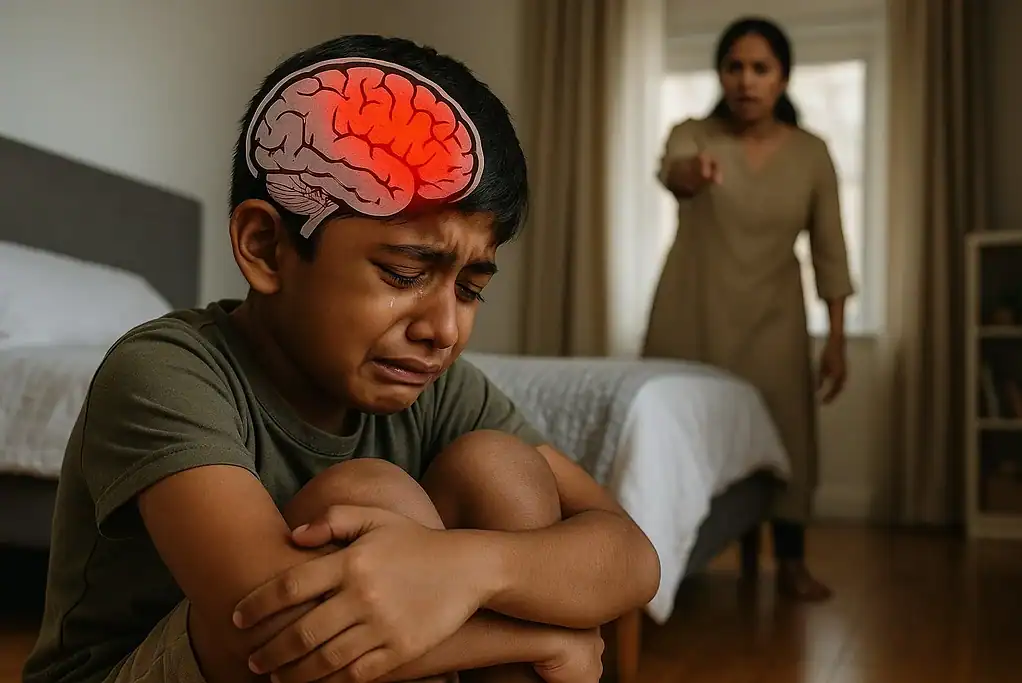
In early life, children do not yet have the ability to regulate their emotions independently.
Their nervous systems rely on caregivers to help them return to calm when they are distressed. This process is known as co-regulation.
When caregivers respond with presence, patience, and emotional availability, a child’s nervous system gradually learns how to regulate itself. Over time, these repeated experiences build the foundation for emotional stability, resilience, and the ability to form secure relationships later in life.
But the emotional stability of caregivers is influenced not only by how they relate to the child. It is also deeply shaped by the relationship between the adults themselves.
A relationship filled with chronic tension, criticism, or emotional distance creates a very different emotional environment than one where adults are able to communicate, repair misunderstandings, and support one another during stress.
This is why the relationship between caregivers matters far beyond the adults themselves.
The couple relationship becomes the emotional atmosphere of the home, the climate in which a child’s nervous system develops.
At this point, it may be worth pausing for a moment and reflecting on your own early environment.
What was the relationship like between the adults who raised you?
Did you witness warmth and mutual respect between them?
Did disagreements end in repair and reconnection?
Or did the environment feel tense, unpredictable, or emotionally distant?
Children are constantly observing long before they fully understand what they are seeing. They watch how adults handle frustration, affection, silence, conflict, and care.
Without realizing it, these experiences become the earliest lessons about what relationships look like and how love is expressed.
These lessons are not written down anywhere.
But they are deeply recorded in the nervous system.
Why We Often Choose Partners Who Feel Familiar

Interestingly, the partners we feel drawn to are not always chosen through conscious reasoning.
Attachment research shows that many of us are naturally attracted to what feels emotionally familiar.
Sometimes that familiarity comes from healthy relational experiences. But sometimes it reflects the dynamics we observed growing up.
The nervous system does not always distinguish between what is healthy and what is simply recognizable. It tends to gravitate toward what it already understands.
This is why people often find themselves repeating relational patterns that resemble the environments they experienced as children.
Someone who grew up around emotional unpredictability may feel drawn to partners who are inconsistent or difficult to reach emotionally.
Someone who witnessed emotional distance may unconsciously gravitate toward partners who struggle with closeness.
Someone who experienced stable, respectful relationships may naturally feel comfortable with partners who offer the same.
If you pause for a moment, you might notice something interesting.
How similar — or different — are the dynamics in your adult relationships compared to the relationships you observed growing up?
Do you notice familiar patterns in the way conflict unfolds?
In how affection is expressed?
In how closeness or distance appears in relationships?
These reflections are not about blame or judgment.
They are about awareness.
Because when relational patterns remain unconscious, people may unknowingly recreate the very dynamics that shaped them earlier in life.
But when awareness enters the picture, something powerful becomes possible.
Patterns that once felt automatic can begin to change.
And with that awareness, people gain the ability to choose relationships not only based on familiarity, but on emotional safety, growth, and the kind of relational environment they wish to create for themselves — and perhaps one day, for the next generation.
The Myth of Being “Too Picky”

This is where social pressure often appears.
Friends, relatives, or even strangers may say things like:
“You are expecting too much.”
“No one is perfect.”
“You should not be so picky.”
Sometimes these comments come from care.
But sometimes they reflect a misunderstanding.
Being intentional about who you build a life with is not the same as demanding perfection.
It is not about unrealistic expectations.
And it is certainly not about arrogance.
Choosing a partner thoughtfully is not about being picky.
It is about being responsible.
Because the person someone chooses as a life partner may one day become the person who helps shape a child’s sense of safety, self-worth, and understanding of relationships.
That is not a small decision.
It is one of the most significant relational choices a person can make.
Conscious Partner Choice

When we view relationships through the lens of attachment and development, the qualities that matter most begin to look different.
Attraction and chemistry are meaningful, but they are not enough to sustain a healthy emotional environment.
More important questions begin to emerge:
How does this person handle stress?
Can they take responsibility for their actions?
Are they capable of repairing after conflict?
Are they emotionally available and respectful?
Can they regulate themselves when emotions run high?
Are they financially stable and responsible?
These qualities shape the emotional climate of a relationship far more than surface compatibility.
And when a child enters that environment, they influence how that child learns about connection, safety, and love.
A Quiet but Powerful Truth About Relationships
When we look at relationships through the lens of attachment and developmental science, something profound begins to emerge.
Choosing a partner is not only about personal happiness, companionship, or romance.
It is also about the emotional environment that two people will create together.
That environment becomes the relational landscape in which daily interactions unfold — conversations, disagreements, moments of care, moments of stress, moments of repair.
Over time, these moments shape how two nervous systems learn to live together.
And when a child enters that environment, those same relational patterns quietly begin shaping a third nervous system as well.
This is how relationships extend beyond the two people involved.
The tone of voices.
The way conflict is handled.
The ability to apologize and reconnect.
The presence of patience or criticism.
All of these experiences gradually become part of the emotional architecture in which a child learns what relationships feel like.
In this way, partner choice becomes more than a romantic decision.
It becomes a developmental one.

Awareness Changes the Pattern
The hopeful part of attachment research is that early experiences do not determine the rest of our lives.
People are capable of developing what psychologists call earned secure attachment.
Through awareness, reflection, healing, and supportive relationships, individuals can transform the relational patterns they inherited.
Healthy relationships are not created by perfect people.
They are created by people who are willing to grow, to repair mistakes, and to take responsibility for the emotional environments they create together.
In that sense, awareness itself becomes one of the most powerful gifts adults can offer the next generation.
A Different Way to Think About Relationships

So the next time someone asks why you are careful about choosing a partner, the answer may become clearer.
Being intentional about who you build a life with is not about expecting perfection.
It is not about arrogance or unrealistic standards.
And it is certainly not about being difficult.
It is about recognizing that relationships shape more than our own experiences.
They shape the emotional environments we live in.
They shape how nervous systems learn safety and connection.
And, they shape the earliest experiences of the next generation.
Because the person you choose to share your life with may one day become the person who helps shape a child’s understanding of love, safety, and belonging.
Seen from that perspective, choosing carefully is not being picky.
It is being conscious of the world you may one day help create.
Thank you for reading and for your heartfelt support and interest. As always, your thoughts, insights, and stories are warmly welcome.
With grace and gratitude,
Lux Hettiyadura
Directress, Child/Adolescent Development & Parenting Coach Education – Ignite Global
If this article touched you, please consider sharing it with someone who may need these words today. Sometimes, the smallest act of passing on knowledge creates the biggest ripple in someone’s healing journey.
Explore More Resources…
🌱 Attachment Healing Circle – A free monthly space to gently heal your attachment system through safe, nurturing connection: Join now.
🌱 How Trauma & Attachment inform Parenting, and Child Development – A free monthly space to explore how trauma and early attachment experiences shape parenting, behavior, and the developing child: Join now.
🎥 Keep Learning on YouTube – Attachment science explained in everyday language, with practical tools you can use right away: Watch here.
📚 Read More – The Good Girls Who Sit by the Phone: Read here.
References:
Ainsworth, M.D.S., Blehar, M.C., Waters, E. and Wall, S., 1978. Patterns of attachment: A psychological study of the strange situation. Hillsdale, NJ: Lawrence Erlbaum Associates.
Bowlby, J., 1969. Attachment and loss: Vol. 1. Attachment. New York: Basic Books.
Bowlby, J., 1988. A secure base: Parent-child attachment and healthy human development. New York: Basic Books.
Cassidy, J. and Shaver, P.R. (eds.), 2016. Handbook of attachment: Theory, research, and clinical applications. 3rd ed. New York: Guilford Press.
Gilligan, C., 1982. In a different voice: Psychological theory and women’s development. Cambridge, MA: Harvard University Press.
Levine, A. and Heller, R., 2010. Attached: The new science of adult attachment and how it can help you find – and keep – love. New York: TarcherPerigee.
Mikulincer, M. and Shaver, P.R., 2007. Attachment in adulthood: Structure, dynamics, and change. New York: Guilford Press.
Mikulincer, M. and Shaver, P.R., 2016. Attachment in adulthood: Structure, dynamics, and change. 2nd ed. New York: Guilford Press.
Wood, J.T., 2015. Gendered lives: Communication, gender, and culture. 10th ed. Boston: Cengage Learning.
Siegel, D.J. and Hartzell, M., 2014. Parenting from the inside out: How a deeper self-understanding can help you raise children who thrive. 2nd ed. New York: TarcherPerigee.
Brown, B., 2012. Daring greatly: How the courage to be vulnerable transforms the way we live, love, parent, and lead. New York: Gotham Books.
Schore, A.N., 2001. Effects of early relational trauma on right brain development, affect regulation, and infant mental health. Infant Mental Health Journal, 22(1–2), pp.201–269.